

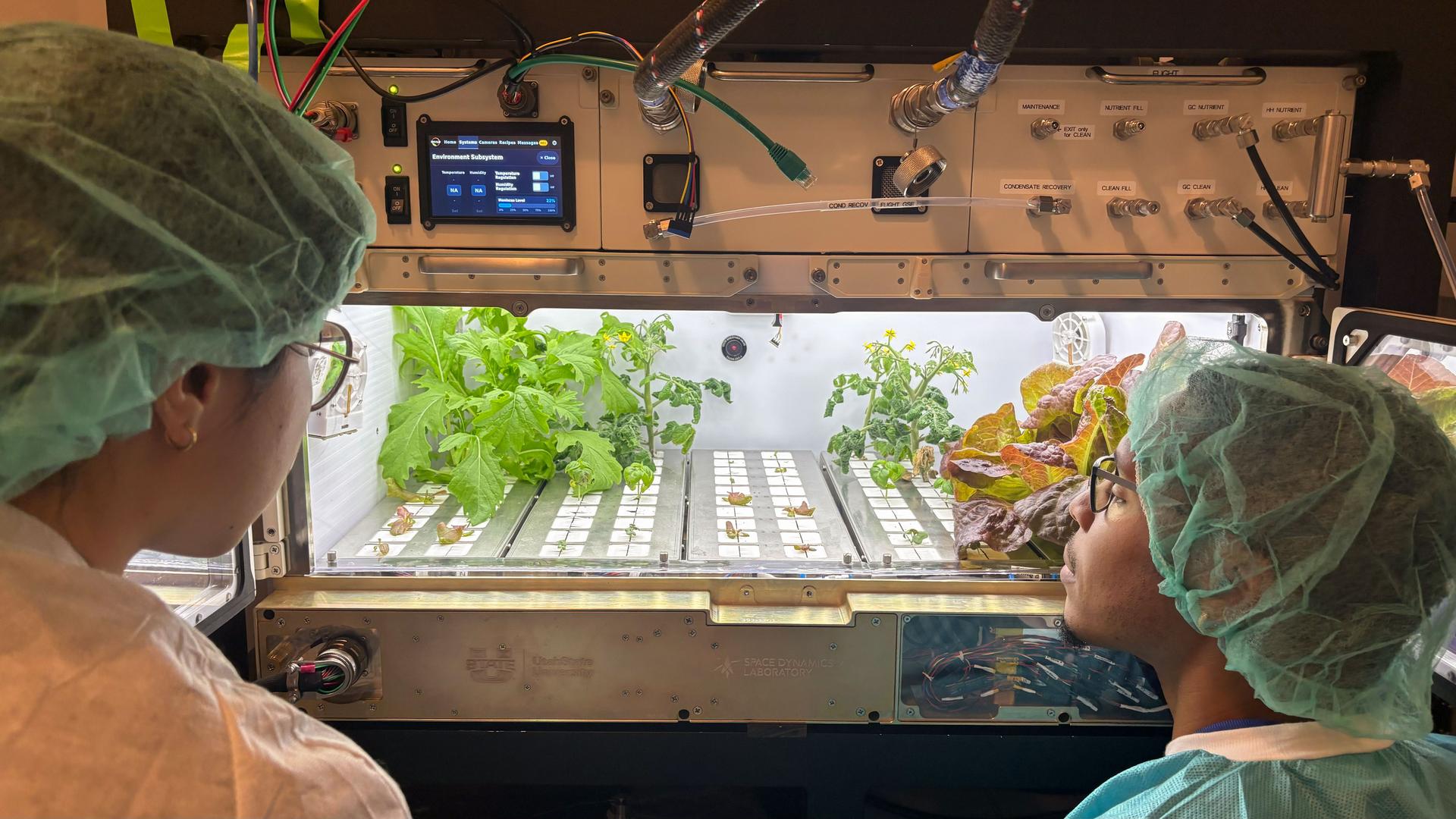
NASA plans to send Ohalo III, a prototype chamber for growing food crops, to the International Space Station aboard Northrop Grumman’s CRS-25 cargo mission. In particular, NASA plans to test how to water plants and use the available growing space in microgravity, according to its November 27 science update.
What Ohalo III will test in orbit
The NASA mission overview describes a mostly automated chamber that can recover water and exchange air. It can also grow several crops at once. For example, a NASA photo of the chamber shows red romaine lettuce alongside tomato, basil and two varieties of mustard.

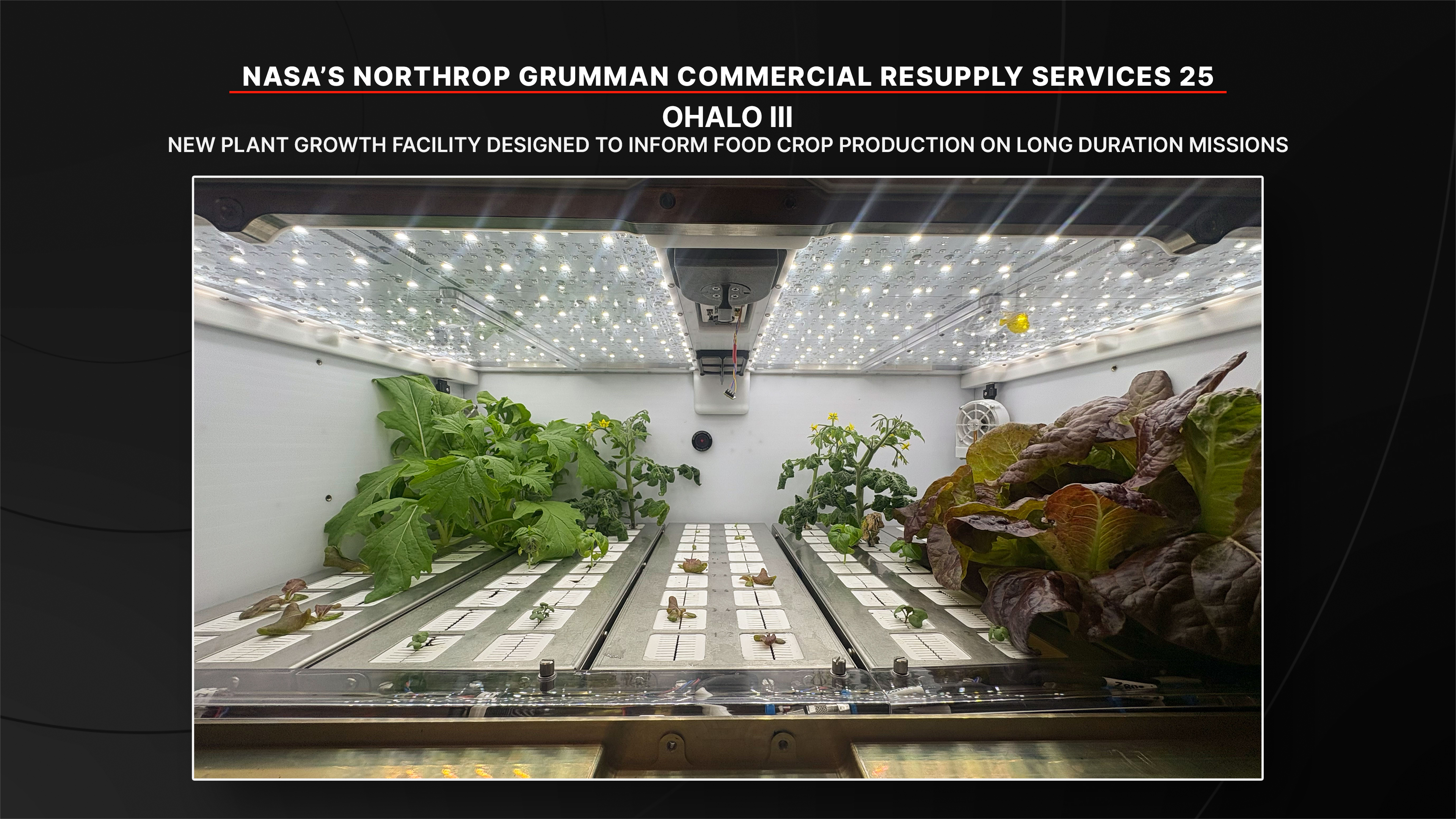
NASA already grows plants aboard the station. For instance, researchers have used the Advanced Plant Habitat to study how well its hardware grows crops for human consumption. NASA describes Ohalo III as a demonstration of what it aims to make the first operational crop production system in space. The agency wants to learn how reliably a system like this can produce nutritious, safe food on longer missions.
Crews currently rely on shelf-stable food. However, NASA says that storage and resupply become harder as crews travel farther from Earth. The agency wants the orbital results to inform future crop chambers for Moon habitats and Mars missions. In addition, NASA sees potential applications in indoor agriculture on Earth, where space and water can also be limited.
When the CRS-25 cargo flight is set to launch
NASA is targeting 10:47 a.m. EST on Sunday, November 29, from Cape Canaveral Space Force Station in Florida. A SpaceX Falcon 9 will carry Northrop Grumman’s Cygnus XL, with about 11,000 pounds of science, equipment and supplies aboard. Tech My Money previously covered NASA’s footage of an earlier Cygnus resupply launch.
Before liftoff, NASA plans to begin live coverage at 10:25 a.m. EST on NASA Live. If the Sunday attempt slips, NASA lists 10:24 a.m. EST on Monday, November 30, as the next launch opportunity.


