
This is a sponsored review. Tech My Money was compensated for coverage, but the verdict and score are based on our own use of MaxHermes over roughly two months.
Minimax AI MaxHermes review: after two months with it, MaxHermes feels like one of the more useful cloud agents I have tested because it is not just trying to answer questions. It is trying to become a repeatable worker that remembers the way you operate, builds reusable skills from harder tasks and keeps running even when your computer is off.
That is the part MiniMax wanted to underline in its follow-up brief, and it is also the part that matches my own experience. MaxHermes is strongest when you use it for repeatable work: research loops, scheduled checks, multi-step writing prep, web tasks, file analysis and workflows where a normal chatbot would make you explain the same context again tomorrow.
The catch is still the same one I felt before: MaxHermes is powerful, but because it lives in the cloud, it does not feel like a full local computer companion yet. It is a little like Superman wearing a kryptonite cape. The strength is there, but the missing dedicated local PC layer keeps showing up in the moments where I want it to touch my real desktop environment, browser profiles, local files and installed apps as naturally as I do.
Hermes Agent, Without the Server Work
The easiest way to understand MaxHermes is to start with Hermes Agent, the open-source agent framework from Nous Research. Hermes Agent is built around the idea that an agent should not only remember conversations. It should remember methods that worked, turn them into reusable skills and improve those skills as similar tasks come back.
That open-source project is exciting, but it is also not something most regular users want to self-host. Server setup, API keys, Docker, updates and security decisions are real friction. MaxHermes is MiniMax’s hosted version of that idea. You get a cloud sandbox, MiniMax’s M2.7 model underneath and a much lower setup barrier.

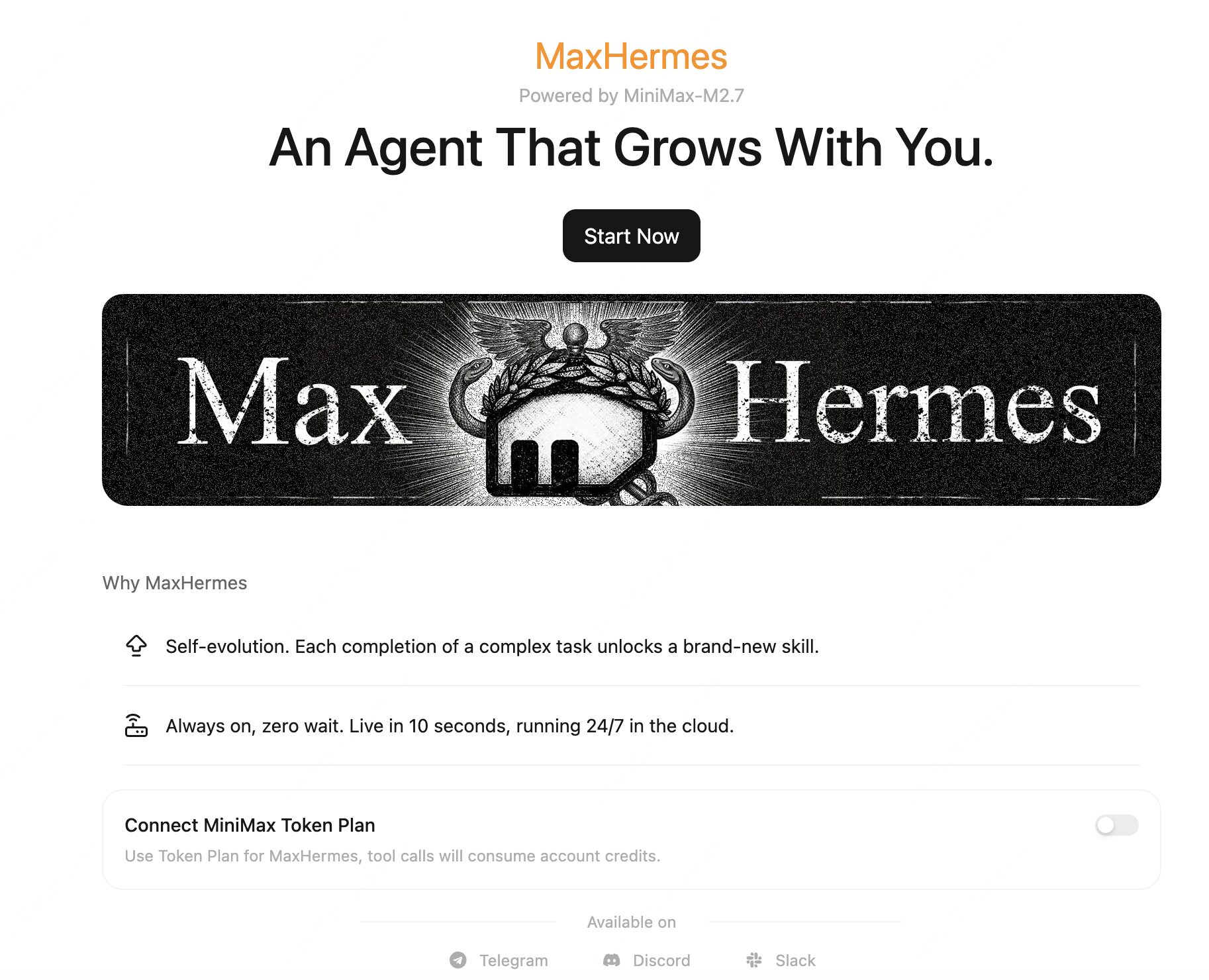
MiniMax positions MaxHermes as a 10-second deployment for Hermes Agent. In plain English, that means you can start using the agent without building the stack yourself. For readers who care about AI agents but do not want a weekend server project, that matters.
The Learning Loop Is the Main Event
The best MaxHermes feature is the learning loop. When the agent completes a complex task, it can evaluate the process, decide whether the approach is worth remembering and turn that process into a reusable skill. The brief says triggers can include multi-tool work, error recovery, user corrections or an efficient path the agent discovers during the job.
That matters because it changes the relationship from “answer this prompt” to “learn this workflow.” A normal chatbot may remember that you prefer shorter summaries. MaxHermes is trying to remember the actual procedure that got a good result. That is closer to an assistant writing its own SOP after doing a hard task with you.
In my own use, that is where MaxHermes feels most promising. It is not perfect, and you still need to supervise important work, but the agent becomes more useful when you give it recurring patterns instead of one-off curiosities. If you ask it to research a topic, organize findings, prepare a post outline and keep a certain editorial rhythm, the value compounds faster than a fresh chat window.
Memory, Skills and Always-On Work
MiniMax describes the system around four layers: persistent memory, a searchable session archive, skill files and ongoing user modeling. The practical promise is simple. MaxHermes should remember who you are, what worked before, what tools were useful and how you like the final output shaped.
That also explains why the cloud version makes sense. If an agent is going to run scheduled tasks, receive messages from chat apps and keep working while your computer is off, it needs a stable place to live. MaxHermes aims to be that always-on layer, with Skills Hub support through agentskills.io, built-in tools, MCP support and parallel subagents for bigger jobs.

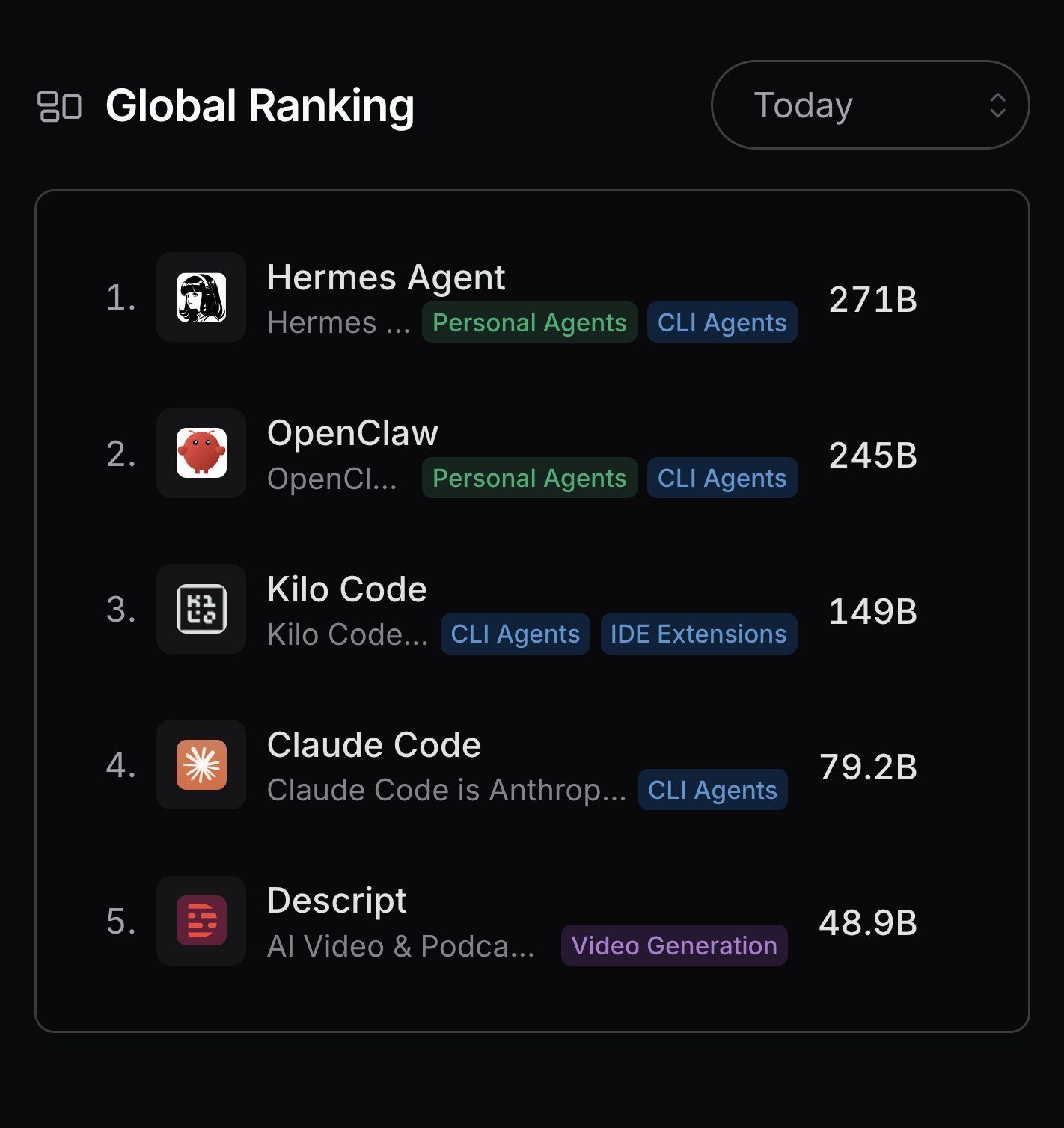
MiniMax’s brief also says Hermes Agent has become a major model-usage presence on OpenRouter. I would treat ranking screenshots as a signal of momentum, not as proof that every user will get the same experience. Still, it helps explain why MiniMax is pushing a hosted version now. The open-source idea has attention; MaxHermes is the productized bridge.
What Felt Strong in My Use
The setup story is the easiest win. MaxHermes feels far more approachable than a self-hosted agent. You do not need to wire together model providers, containers and server permissions before you can find out whether the thing is useful. That alone makes it more realistic for creators, solo operators and small teams.
The second strength is continuity. I like agents that can pick up a workflow without making me rebuild the whole context from scratch. MaxHermes is not magic, but the direction is right. The more structured the task, the better it feels: collect sources, compare them, prepare a content plan, revisit the same format later and improve the steps.
The third strength is that MiniMax is not pitching this as only a chat window. The brief points to scheduled automation, chat-app access, file work, web browsing, code execution, data analysis, MCP connections and subagents. That is the correct shape for a serious agent product. A real agent should not be trapped inside a blank text box.
It is also worth noting that MaxHermes is powered by MiniMax M2.7. I am not going to pretend model benchmarks tell the full story, but the model gives MaxHermes enough reasoning and tool-use headroom to feel useful in longer workflows.
Where the Kryptonite Cape Shows Up
The cloud is both the feature and the limitation. I like that MaxHermes runs without my computer being awake. I like that it can be available across sessions. But the same cloud setup means it does not fully inhabit my machine. It cannot naturally become my desktop operator, my local file assistant and my authenticated browser partner unless I deliberately route those pieces through supported tools.
That is why I am still using MaxHermes while watching closely for OpenAI to bring proper Codex chat support into the agent experience. The dream is not just a smart cloud worker. The dream is a smart worker that can also sit beside your real local workspace with permission, memory and judgment.
There are a few other places where MiniMax should keep tightening the story. Users need very clear controls for what the agent remembers, what skills it creates, how those skills can be reviewed or deleted and what costs show up when token plans and tool calls enter the picture. MiniMax’s Token Plan makes sense for heavier use, but agents become more trustworthy when billing and memory are impossible to misunderstand.
The platform messaging also needs clean, current wording. MiniMax’s materials talk about chat-app access and expanding platform support, while the brief also notes WeChat and Feishu as current supported options in one section. That is not a deal-breaker, but it is the kind of detail that should be crystal clear on a product page.
MaxHermes vs MaxClaw
MiniMax also frames MaxHermes differently from MaxClaw. MaxClaw is about OpenClaw-style multi-agent orchestration. MaxHermes is about a single Hermes-based agent that evolves through its own skills and memory. That distinction is useful because the products are not trying to solve the same exact problem.
If you want an agent team that divides work across multiple workers, MaxClaw is the more obvious pitch. If you want one assistant that keeps learning your workflow over time, MaxHermes is the cleaner fit. For my own daily use, the self-evolving memory angle is the reason MaxHermes keeps my attention.
Tech My Money Ratings
- Ease of setup: 9/10
- Agent workflow depth: 8.5/10
- Learning loop and skill system: 8.5/10
- Integrations and tools: 8/10
- Local workflow control: 7/10
- Trust, memory clarity and cost transparency: 8/10
Overall score: 8.2/10. MaxHermes earns that score because it has a real product idea behind the hype. It is not just another chatbot wrapper. The learning loop, always-on cloud setup, skills system and M2.7 foundation make it worth using. The score stays short of elite because the local-PC gap is still real, and because memory, platform support and billing should be clearer for everyday users.
Who Should Try MaxHermes
MaxHermes makes the most sense for people who repeat complex workflows. Writers, researchers, marketers, developers, founders and AI-heavy operators will get more from it than casual users who only ask random questions. If you can give it patterns, it has a better chance to become useful.
It is also worth trying if you have looked at open-source agents and bounced off the setup. The hosted approach removes the scariest part of Hermes Agent and lets you focus on whether the workflow fits your life. That is the right bet for a product like this.
Verdict
MaxHermes is one of the more interesting cloud agents right now because its best idea is not raw speed or a giant feature list. Its best idea is compounding. The more useful tasks it completes, the more it can turn those paths into skills and bring them back later.
After two months, I still like it. I still use it. I also still feel the ceiling that comes from not having a dedicated local PC presence. If MiniMax can keep improving that bridge while making memory, skills, platform support and pricing easier to audit, MaxHermes could become a serious daily agent for people who want more than chat.
For now, it is powerful, promising and occasionally held back by its own cape. That is still a much better place to be than boring.