
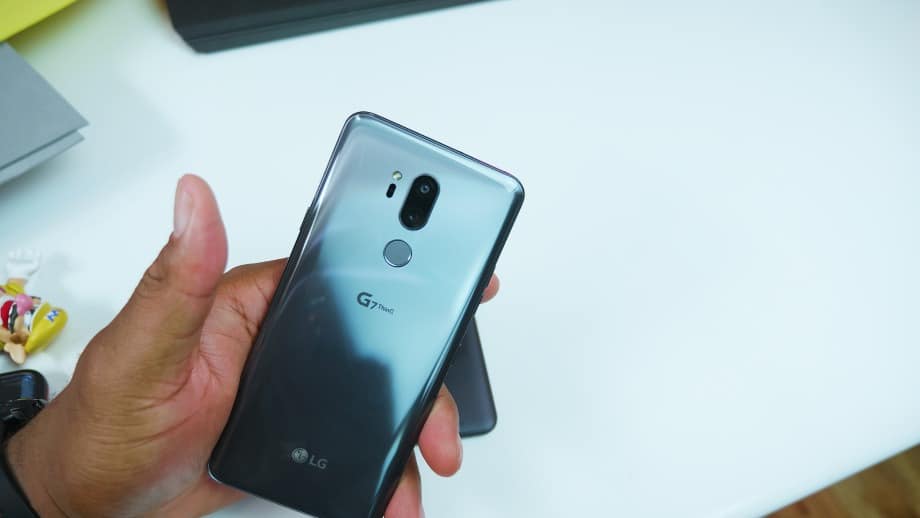

For some reasons not known to man, LG has made so many underrated phones. Even when they push the limits with evolutionary devices like the LG V10, V20, and the modular G5 they don’t seem to garner the accolades they deserve. Let’s just say that the V30S flew under the radar too, but LG’s new device the LG G7 ThinQ is here with a ton of improvements that is enough to grab your attention with features like a more powerful AI camera, a super-loud speaker and the brightest display on a smartphone.
LG G7 ThinQ Features
- 6.1-inch, QHD+, IPS, 19.5:9 screen
- Snapdragon 845 CPU
- 4/6GB (market dependent)
- 64/128GB storage
- Dual sensor rear camera with 16-megapixel, 1.6 (OIS) 77 degree main, 16-megapixel f1.9, 107-degree secondary
- 8-megapixel front camera
The Design
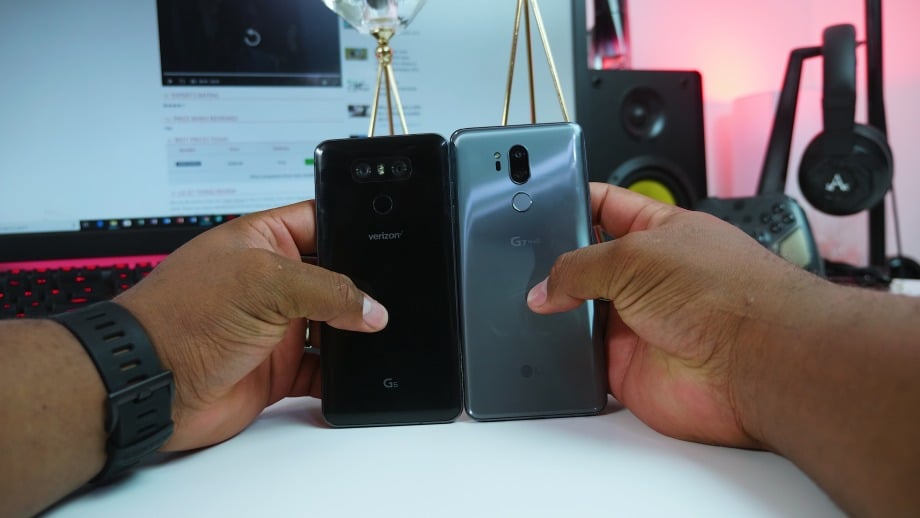
If you’ve noticed, this is the season of the notch, almost all the recently released smartphones have a notch of some sort. Yes, the G7 ThinQ has a notch too. It’s the little cutout at the top of the screen, housing the front-facing camera and earpiece. When it comes to looks, the G7 has softer edges like the LG V30, the back is slightly curved and the corners are rounded making it comfortable to hold. The front and back panels are made of glass Gorilla Glass 5 to be precise and metal rails run along the perimeter, giving it that premium feels when you hold it. The G7 is available in black, blue, gray, and rose, though availability depends on the carrier of your choosing.


The Display
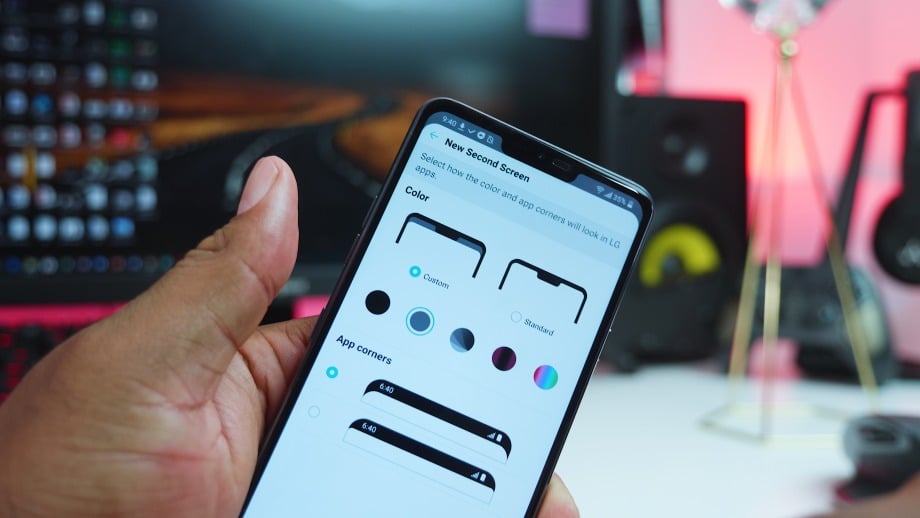
As for the LG G7 ThinQ dimensions, the numbers ring in at 6.0 by 2.8 by 0.3 inches (HWD), it weighs in at 5.7 ounces making it easier to use in one hand. The LG G7 ThinQ is tall and narrow, it comes with a 19.5:9 aspect ratio screen, thin bezels, and a notch. Just as you’d expect the notch houses the earpiece, front-facing camera, proximity sensor and ambient light sensor it’s nothing like the barrage of sensors hiding behind the iPhone X notch. If you’re not a notch person, the software feature that allows you to camouflage the notch to look like a thin bezel. Lg didn’t stop at that as the notch can be customized with different colors and gradients. For those who like the notch, it’s worth noting that it does not interfere with content consumption of mobile gaming. The notch on the G7 ThinQ will automatically turn into a black bezel when you’re are using your device with the notch.
Performance and Battery
Spec wise, The LG G7 ThinQ device we tested was rocking the latest Snapdragon 845 chipset clocked at 2.8GHz, 4GB of RAM, 64GB of internal storage and a microSD card slot that can accept up to 2TB cards. The speedy performance of the LG G7 can be attributed to the powerful Snapdragon 845. Gaming on this device, application launching, and entertainment consumption was totally lag free with excellent touch response, and fast /fluid animations. You can opt to get the 6GBRAM and 128GB of storage option.
The battery life is good, but don’t forget to take your charger with you if you’ll be on the road for a day. The 3000mAh battery will give you about 7 hours of intensive use or a full day of moderate use. If you need more juice out of your device, LG has baked in some power saving modes into the settings menu to help you identify and kill power-draining apps, as well as taper down screen brightness and background processes. If at any time of your use there’s a need to charge the device, the G7 ThinQ fast charging adapter can charge rapidly juice up the device via Qualcomm’s Quick Charge 4.0 or through wireless charging.

In most of LG’s devices, the company lays big emphasis on audio, and they’ve always delivered. The G7 audio spec sheet is stellar, the phone still comes with a 3.5mm headphone jack in addition to the quad DAC which come with DTS:X 3D surround sound or virtual surround sound for DTS :X or non-DTS :X files. The DTS:X 3D surround on board the G7 ThinQ is designed to give you a surround sound experience when using a headphone.

Camera
Finally, LG has upgraded its front-facing camera. The LG G7 ThinQ now has an 8MP front-facing camera, which is great for selfies. The extra resolution added to the front-facing camera makes a huge difference in the quality, details, and sharpness of the pictures taken. For the rear camera, the G7 ThinQ uses the same verticle dual-cam setup seen on previous LG devices, the usual standard, and a wide-angle lens combination. Both rear sensors have OIS and are 16 megapixels, meaning that users won’t be plagued with loss of resolution when switching sensors. The main sensor has a brighter f/1.6 aperture compared to the f/1.9 of the wide angle camera. It seems like LG has been listening to their user base, as the wide angle lens has been reduced to a 107-degree field-of-view to help eliminate barrel distortion on the edges of photos. For those of you interested on how the G7 fares with videos, the G7 tops out at 30fps in 4K, but you can record video in HDR. The Cine Video mode we saw on the V30 that lets you apply some filters to make your footage look more cinematic made it to the G7.

Another interesting feature LG added to the G7 camera is the AI cam. The AI cam is capable of analyzing 19 different types of scene or subjects, and then it applies color filters, brightness and recommends the wide-angle camera or Super Bright Camera when appropriate. In order to access the AI cam on the G7 ThinQ, you’ll have to turn it on as it’s turned off by default. There’s no need to worry about internet connectivity when using the AI cam feature, all the image processing are done on-device.
There’s also Super Bright Camera mode that can be used to take pictures when the scene is too dark. This mode uses a technique called pixel binning to combine four pixels into one. The downside here is, photos taken with this mode are lower in resolution, you get a 4Mp photos rather than 16Mp. All the videos shot with the Super Bright Mode on will use the same pixel binning method, leaving you with a full HD quality rather than 4K in low light. Without the Super Bright mode on, the cameras still do a good job at maintaining plenty of details, color, and it keeps noise to a minimum.
Overall, the image and video quality of the G7 is good. The main camera produces images with pleasant colors and crisp details, while the upgrade to the front-facing camera was a much-needed upgrade.
Software
For people coming from an older LG device, you’ll just feel at home. LG G7 ThinQ runs Android 8.0 Oreo out of the box on top of its heavily customized UI. LG decided to play it safe by using Google’s own Assistant instead of creating its own voice-activated assistant to compete with Siri, Alexa or Bixby.
The G7 comes with a few pre-loaded apps including LG Health, a file manager, LG’s own music and gallery apps, Smart cleaning – for optimizing memory use, LG Mobile Switch and SmartThinQ; LG’s app for controlling your ThinQ-compatible appliances. By default, the launcher does not have an app drawer, you can enable the traditional Android app drawer button or use a swipe up gesture option. Just like its predecessors, LG’s theme engine allows for further customization with additional wallpapers, icon packs, UI themes, and always-on display clocks.

Overall, the LG G7 ThinQ is a good phone. It comes with a very bright screen, it’s water-resistant, comes wireless charging, it has a surprisingly good sounding mono speaker and it still has a headphone jack. The G7 ThinQ can be listed as another fantastic device from LG. Despite its tall screen, the phone can still be used one-handed. Spec wise, the LG G7 Thinq can go toe-to-toe with any flagship device launched this year.
The LG G7 ThinQ is available on all U.S carriers with their specific deals or promotion, see the source link below for more.